What is the Best Hiking Sleeping Bag for Your Next Adventure?
Choosing the right hiking sleeping bag can greatly impact your outdoor experience. The perfect sleeping bag provides warmth, comfort, and ease of transport. However, with so many options available, it’s easy to feel overwhelmed. Not every bag works for every situation, leading to reflections on past trips that fell short.
Imagine setting up camp after a long hike. You unzip your bag, only to find it’s not warm enough for the chilly night air. Your comfort is compromised, and sleep becomes elusive. This experience can detract from the whole adventure. A good hiking sleeping bag should insulate against the cold, pack easily, and fit your unique style.
Consider insulation types, weight, and size. Some bags are bulky and heavy, making them impractical for long treks. Others may not fit well, leaving you restless. In the end, taking time to research and select the right hiking sleeping bag is essential for a positive outdoor experience. Every adventure deserves a good night’s sleep.

Understanding the Different Types of Hiking Sleeping Bags
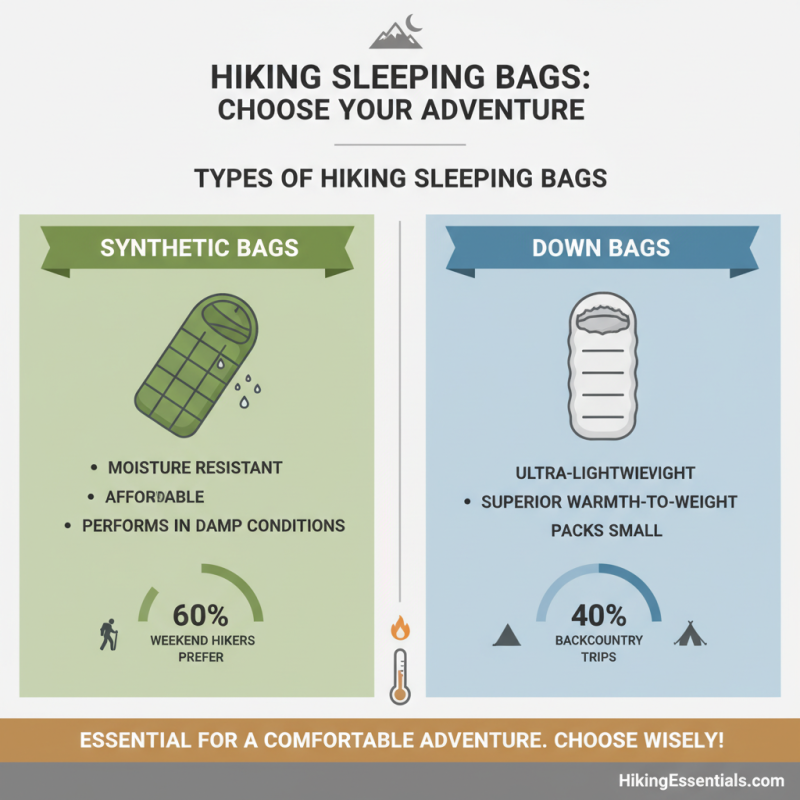
Choosing the right hiking sleeping bag is essential for a comfortable adventure. There are various types of sleeping bags, and each serves a specific purpose. Synthetic bags are popular due to their moisture resistance and affordability. They perform well in damp conditions, with a weight-to-warmth ratio that many find appealing. Data indicates that about 60% of hikers prefer synthetic options for weekend trips.
Down sleeping bags, on the other hand, are prized for insulation and compressibility. When properly cared for, they can last a lifetime. However, down loses its insulating properties when wet. This is a significant concern. In fact, a study by the Outdoor Industry Association shows that moisture management is a top priority for 45% of hikers. The downside of down is its cost, which can deter beginners.
Lastly, there are hybrids that combine both materials. These are versatile, catering to a variety of conditions. However, they often come with a trade-off in weight. Selecting the best sleeping bag requires consideration of your hiking conditions and personal comfort. The options are many, but each comes with unique benefits and challenges. Balancing weight, temperature rating, and your budget is crucial. Understanding these different types will enhance your outdoor experience.
Key Features to Look for in a Hiking Sleeping Bag
When choosing a hiking sleeping bag, several key features should be considered. The temperature rating is crucial. It indicates how warm the bag will keep you. Look for a bag that matches the conditions you'll face. If you're hiking in cold weather, a lower temperature rating is necessary. However, for warmer climates, a lighter bag is sufficient.
Material matters too. Down insulation is warm and compressible. Synthetic materials are moisture-resistant and easier to care for. The choice depends on your hiking style. Evaluate how much weight you are willing to carry. Lightweight bags are great for long treks, but they might compromise warmth.
Tips: Always test your bag before you go. Spend a night in it at home. Ensure it is comfortable and fits well. Check for zippers and seams. A faulty zipper can ruin your trip.
Another detail to focus on is the shape. Mummy bags are snug and efficient for warmth. Rectangle bags offer more room but may not trap heat effectively. Choose a shape that suits your sleeping habits. If you're a restless sleeper, a roomier option might be better. Remember, your comfort directly affects your energy for hiking.
Evaluating Temperature Ratings for Different Environments
When choosing a sleeping bag for hiking, understanding temperature ratings is crucial. Each sleeping bag is designed for specific conditions. A bag rated for 20°F may feel warm in winter but can be too hot in spring. Proper insulation is vital for comfort and safety.
Be mindful of your environment. In high-altitude areas, temperatures can drop unexpectedly. A lightweight bag may suffice in summer, but you might regret it when temperatures fall at night. Layering your clothing inside the bag can help, but the right sleeping bag is still essential.
It's good to check the bag's materials. Synthetic fills dry quickly, while down fills provide great warmth—but they can be pricey. Reflect on your needs and past experiences. Did one bag leave you feeling cold? Or too sweaty? These reflections can guide your next decision in picking the perfect bag.
Comparing Weight and Packability for Hiking Efficiency
When choosing a sleeping bag for hiking, weight and packability are crucial factors. A lightweight bag ensures you can trek longer distances without being weighed down. Many hikers struggle with finding the right balance between comfort and convenience. A compact bag can often fit more easily in your backpack. However, it may sacrifice some warmth or durability.
Consider the materials used in the sleeping bag. Down insulation is light and compressible, but it can be impractical in wet conditions. Synthetic materials might weigh slightly more, yet they perform better when damp. Reflect on your typical hiking environment. Are you often in humid areas or dry landscapes? These choices significantly impact your overall efficiency on the trail.
Pack size also deserves attention. A bag that fits well in your pack can leave space for other essentials. Yet, some bags feel cramped, making it hard to maneuver inside. It’s essential to take a realistic view of your needs. Try different designs and see how they fit into your hiking gear. Only then can you make sure you're prepared for your next adventure.
Budget Considerations: Finding Value in Sleeping Bags
When planning a hiking trip, selecting the right sleeping bag is crucial. Price is often a key concern. Many outdoor enthusiasts seek balance between quality and affordability. There are several options available that offer good insulation without breaking the bank. Look for sleeping bags with decent fill power. Weight matters too; a lightweight bag can significantly enhance your experience.
Consider the materials used in the bag. Synthetic insulation is often cheaper and performs well in wet conditions. Yet, down insulation provides superior warmth for its weight. Some bags combine both materials, giving you the best of both worlds. Don't forget to check the temperature rating. A bag that claims to be suitable for cold weather may not keep you warm enough.
Be prepared to make trade-offs. Sometimes a budget-friendly bag might compromise on durability. You may find yourself replacing it sooner than expected. Think about where and how often you'll use it. If you're a frequent hiker, investing a bit more might be worth it. Make a list of your hiking needs and prioritize. This reflection can help you choose wisely while staying within budget.