How to Choose the Best Travel Back Pack?
Choosing the right Travel Back Pack can shape an entire journey. It affects your shoulders, walking rhythm, sleep, and daily confidence. A stylish design may look appealing in a shop, yet feel painful after two hours on uneven streets. That lesson is easy to ignore.
Andrew Skurka, an award-winning long-distance hiker and backpacking expert, offers a practical reminder: “The best backpack is the one that fits your body and supports your actual journey.” His view encourages travelers to examine real needs, not marketing claims. A weekend city trip needs different features from a month-long trek through humid mountains.
Start with fit. Measure your torso, adjust the hip belt, and test the pack with realistic weight. Your hips should carry most of the load. The shoulder straps should feel secure, not restrictive. Walk up stairs with the bag loaded. Bend forward. Notice pressure near your neck or lower back.
Capacity matters, but bigger is not automatically better. A 40-liter pack may suit flexible travel, while a 60-liter model can become heavy and tempting to overfill. Water-resistant fabric helps during sudden rain, but it does not replace a proper cover. Durable zippers, breathable back panels, accessible pockets, and repairable components also deserve attention.
Some advice remains imperfect. Personal comfort differs, and no specification guarantees a perfect experience. I once preferred extra pockets, then discovered they encouraged unnecessary packing. Your priorities may change after one uncomfortable trip. Choose carefully, test honestly, and leave room to reconsider.
Define Your Travel Needs and Backpacking Style
How to Choose the Best Travel Backpack
Define Your Travel Needs and Backpacking Style
Your route should decide the backpack, not fashion or capacity alone. A weekend city trip needs different features from a ten-day mountain route. The Outdoor Industry Association’s 2024 Outdoor Participation Trends Report recorded 175.8 million Americans participating in outdoor recreation during 2023. That range includes casual day trips and demanding backcountry travel. Consider your actual habits. Will you carry a laptop, wet clothing, cooking equipment, or only lightweight layers? Start with the route.
Airport movement also matters. The International Air Transport Association’s 2024 Global Passenger Survey found that 71% of travelers would travel more if airport processes became simpler. A compact backpack can support that preference. Measure its empty weight, check its dimensions, and test access while standing. A clumsy bag becomes frustrating during security checks and crowded transfers.
Your backpacking style should shape its structure.
Minimalist travelers may prefer a narrow pack with limited compartments. Photographers, remote workers, and family travelers usually need stronger organization and padding. Try the backpack with realistic weight, including two water bottles and a jacket. Adjust the shoulder straps and hip belt carefully. I once chose a large pack for flexibility, then carried half-empty space through three stations. That mistake still influences my choices. Comfort matters more than impressive capacity. Weather resistance, repairable hardware, and a ventilated back panel deserve practical attention, too. A perfect choice is unlikely. Your first trip will reveal what you misjudged.
Compare Backpack Sizes, Capacity, and Weight
How to Choose the Best Travel Backpack?
Backpack size should match your route, not your packing anxiety.
A 20–30-liter pack suits day trips and short urban journeys. For a week of light travel, 35–45 liters offers better balance. Always check airline cabin rules before flying, because dimensions differ between carriers. SITA’s 2024 Baggage IT Insights reported 6.9 mishandled bags per 1,000 passengers in 2023. A compact carry-on can reduce dependence on checked luggage, though it cannot prevent every problem.
Capacity is only useful when the bag remains comfortable.
An empty backpack weighing 1.2 kilograms leaves more room for clothing than one weighing 2 kilograms. Yet frame support, padded straps, and a stable hip belt may justify a little extra weight. The American Academy of Pediatrics commonly advises keeping loaded backpacks near 10% of body weight. That limit is not perfect for every adult, but it is a useful warning. I once treated unused space as a benefit. It became an invitation to overpack.
Tips:
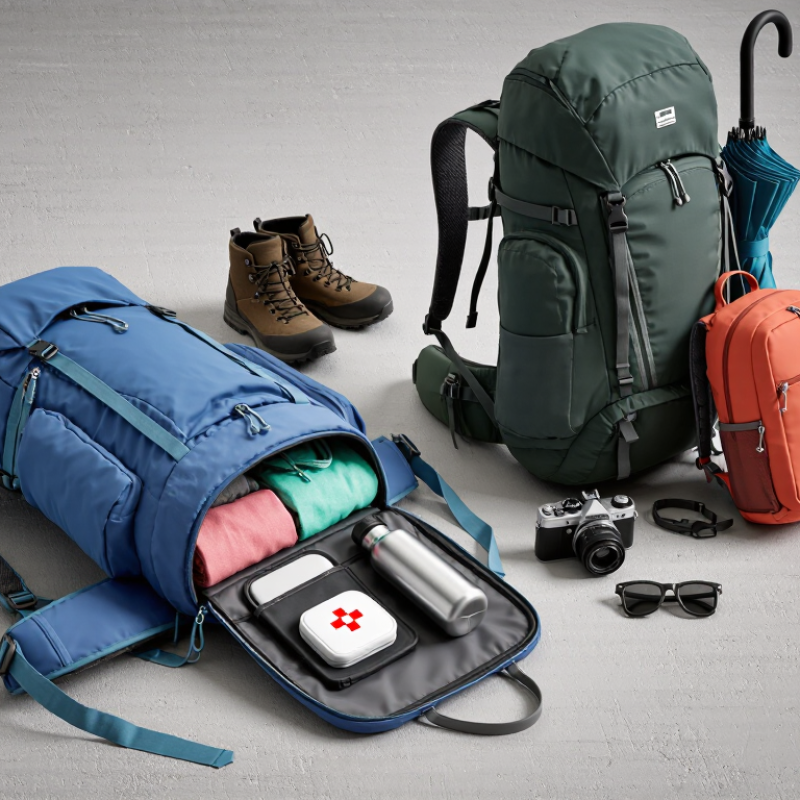
Lay out everything first. Remove duplicates. Aim for 8–12 kilograms when possible. Measure the packed bag, not the empty shell. Place shoes near the bottom and heavier items close to your back. Walk for ten minutes before traveling. If your shoulders ache, the capacity is already too large for your needs. A rain cover helps, but it does not replace waterproof packing bags.
Evaluate Materials, Comfort, and Organizational Features
When choosing a travel backpack, examine its materials before admiring its appearance.
Tightly woven nylon or recycled polyester can handle crowded stations and repeated handling. Reinforced stitching matters most around shoulder straps, handles, and the bottom panel. A water-resistant coating may protect clothing during a short shower.
It is not waterproof.
I once trusted a coated bag during heavy rain, and the inner pocket still became damp. That experience taught me to carry a lightweight cover for uncertain weather.
Check the zipper movement, seam finishing, and fabric thickness with your hands.
These small inspections often reveal quality better than a product label.
Comfort depends on fit, not just padding.
Adjust the shoulder straps until the pack sits close to your back without pressing your neck. A padded hip belt should transfer weight toward your hips, especially when carrying shoes and electronics. A ventilated back panel can reduce sweat, though it may slightly increase the bag’s depth.
Test it loaded. Walk, bend, and lift it from the floor.
No pack fits everyone. Organizational features should match your habits. Separate compartments help divide clean clothes, cables, documents, and toiletries. A clamshell opening makes packing easier, while smaller pockets keep a passport or charging cable accessible. However, too many pockets can encourage overpacking.
I still prefer one clear main compartment and a few purposeful sections, because searching through six shallow pockets wastes time.
Check Security, Weather Resistance, and Durability
How to Choose the Best Travel Back Pack?
A secure travel backpack should protect more than your wallet. Look for lockable zippers, reinforced seams, and pockets that sit against your back. During a crowded train ride, a front-opening bag can expose everything at once. I prefer compartments that open fully but remain easy to control. Hidden pockets help, though they are not magic. Keep valuable documents in separate locations, and avoid advertising expensive equipment.
Weather resistance matters when skies change quickly. Choose coated fabric, sealed stitching, and a covered zipper track. Water-resistant material can handle light rain, but it may fail during a long downpour. A removable rain cover adds useful protection. Test the fit before traveling. Loose covers can catch wind or collect water underneath. I once trusted a fabric panel too much and found damp clothing after a short storm. That mistake changed how I judge bags.
Durability depends on construction, not just thick material. Check the shoulder-strap attachment points, handle stitching, and base panel. These areas receive repeated stress on airport floors and bus racks. A strong frame can improve comfort, but excessive rigidity may waste space. Load the backpack with books before buying it. Walk for ten minutes. Notice pressure near your shoulders and lower back. If the bag feels uncomfortable empty, it will feel worse after a full day. Small design flaws matter.
Select the Best Backpack for Your Budget and Trip Type
Choosing the best travel backpack starts with your budget and trip type, not a fashionable logo. For weekend city trips, a 20–30 liter pack usually holds two outfits, a light jacket, toiletries, and a tablet. Longer journeys may need 35–45 liters, especially when laundry access is uncertain. Check your airline’s current cabin rules before buying. Size limits vary, and a slightly oversized bag can create expensive airport problems.
A practical budget backpack should have a padded hip belt, breathable back panel, strong zippers, and a separate laptop sleeve. Spend more on fit and comfort than on decorative pockets. The SITA Baggage IT Insights 2024 report recorded 6.9 mishandled bags per 1,000 passengers in 2023. A discreet luggage tag, lockable zippers, and internal organization can reduce confusion during transfers. They cannot prevent every mistake.
For hiking, choose adjustable torso length, load lifters, and water-resistant fabric. For hostels, a front-opening design is easier than a deep top-loader. My own packing mistake was carrying too many “just in case” items; the bag felt heavy before the trip began. A useful rule is to test the loaded pack for fifteen minutes at home. If your shoulders hurt early, reconsider the size or fit. The cheapest option is not always the best value. But the most expensive one may not suit your body or itinerary.